
193: Pause
A Chicago orchestra takes a break

Name That Tune
This week’s Name That Tune is another Maestro Will special. Two MWSs in a row means we either need more submissions, or Joey needs to load more of your submissions into the docs. Ye who are the warriors of tune submitting, do your great work. (p.s. That was your clue.)
As always, your goal is to provide as much accurate analysis as possible. First try to get the nationality, year, and genre, then make educated guesses about the composer and — if possible— the piece. If you know the piece immediately, send us an email at toneprose@substack.com instead of commenting so the rest of us can have fun guessing.
Last Week’s Results
Tone Prose 192
Boccherini, Guitar Quintet No. 2
Listener Kevin wrote in with the correct composer ID! Listener Eric came in close with Haydn, and Joey came in a bit further afield with Dvorak, Mendelssohn, and Tarrega.
Think you can stump your fellow Listeners? Go ahead and try!
Head to our Google Form to submit a YouTube link OR upload your own 30-second clip of an unidentified piece of classical music for us to try to identify.
Strategic Renewal Period
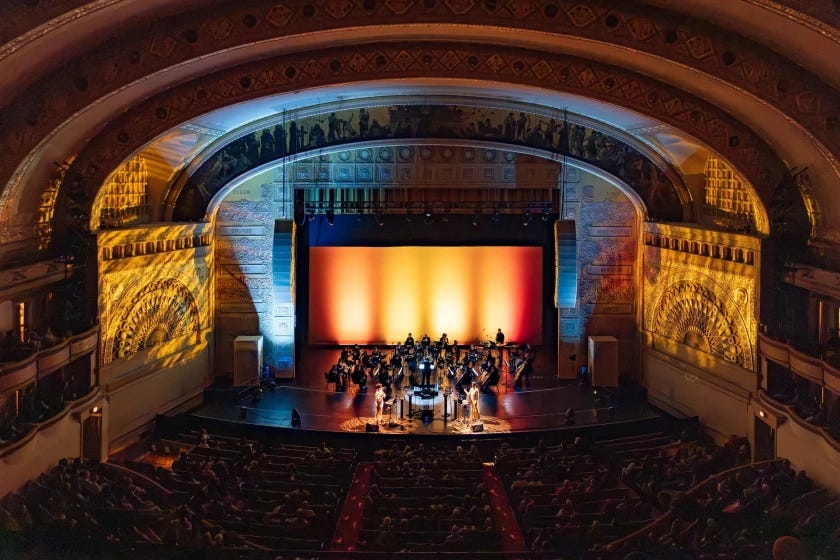
The Chicago Sinfonietta will pause artistic and educational activities at the end of its 2025-26 season this month amid financial challenges, the organization announced Thursday.
A spokesperson confirmed that the group will lay off its seven administrative staffers, leaving President and CEO Sidney Jackson as the only full-time employee.
Concert attendance and audience contributions have not returned to pre-COVID-19 pandemic levels, according to a statement. As a result, the organization will focus on fundraising and sustainability planning during a “strategic renewal period.”
For those who are unfamiliar with this orchestra, the article explains that “Paul Freeman founded the Chicago Sinfionetta in 1987 with a mission to advance equity in classical music by developing diverse talent and reaching underserved audiences.”
This is a tough position to be in — generally speaking, donors aren’t interested in donating to inactive organizations. I hope they can make it work, because this orchestra plays a major role in the cultural life of America’s second city.
When I read this article, I was interested in learning more about the Sinfonietta’s situation, and this seems like a good opportunity to point out that anyone in the world can look up the tax filings of a U.S. nonprofit organization and get a fairly granular picture of their finances. There are ways of doing this, but my go-to source is ProPublica. Here’s their breakdown for the Chicago Sinfonietta:
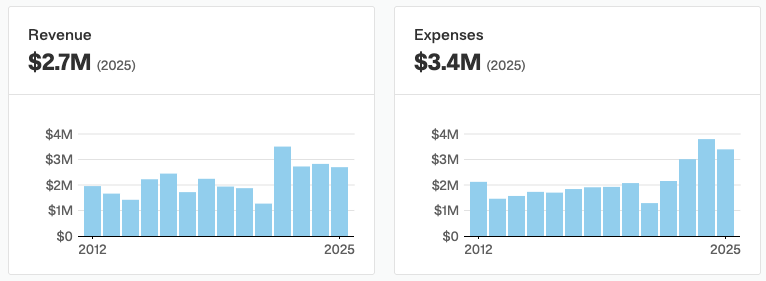
Right away, we can see that the Sinfonietta’s balance sheet isn’t adding up. If we go a little deeper, we find this:

That’s also dicey. Generally speaking, orchestras shoot to have their income sources balanced in thirds: one-third from ticket sales, one-third from donations, and one-third from grants and corporate sponsors. In the above chart, “contributions” refers to the full bundle of donations and grants, so you’d want that number to be 66% (or lower.). When less than 10% of your income comes from ticket sales, things start to look grim.

“Other Salaries and Wages” is the amount they paid their musicians last season. $1.1m is a lot of money. (I know you all come to Tone Prose for my trenchant financial analysis.) A relative rarity in this filing is that you can see how much the Sinfonietta’s music director makes:

That’s rare because most music directors work as independent contractors rather than as employees, meaning that the organizations don’t report their compensation as a line item on their tax forms. (Once you get good at reading these things, you can often suss out this number by digging into the filing, but sometimes it’s downright impossible.)
Anyway, let this post serve as a combination public service announcement / well-wishing to the Chicago Sinfonietta. It’s an excellent orchestra and I hope it rises like a phoenix from the ashes.
Tone Praise
Bach, Keyboard Concerto No. 3, mvmt. 3
Vibrato’s back, BABYYY!!!!
Tone Prose is a co-production of William White, Joseph Vaz, and the Listeners (i.e. you.)
Dang, I've been called out - I'll put some listener submissions in for next week's edition! (But more submissions are ALWAYS welcome, people.)
NTT: This immediately sounds Eastern European to me, and something about the middle section sounds like Bartered Bride to me, so I'll lead with Smetana. I'll also add Dvorak, though it doesn't really sound like him to me, and maybe early Sibelius for a more Northern flavor.